
SYSTEMS / DIGITAL HUMANS + APPLIED AI
Digital Human Avatars
A human face for your AI.
We developed digital human experiences for museums and retail stores in the United States, connecting Unreal Engine avatars with large language models.
A model-agnostic foundation brings a visual identity, conversation and optional generated voice into one application.
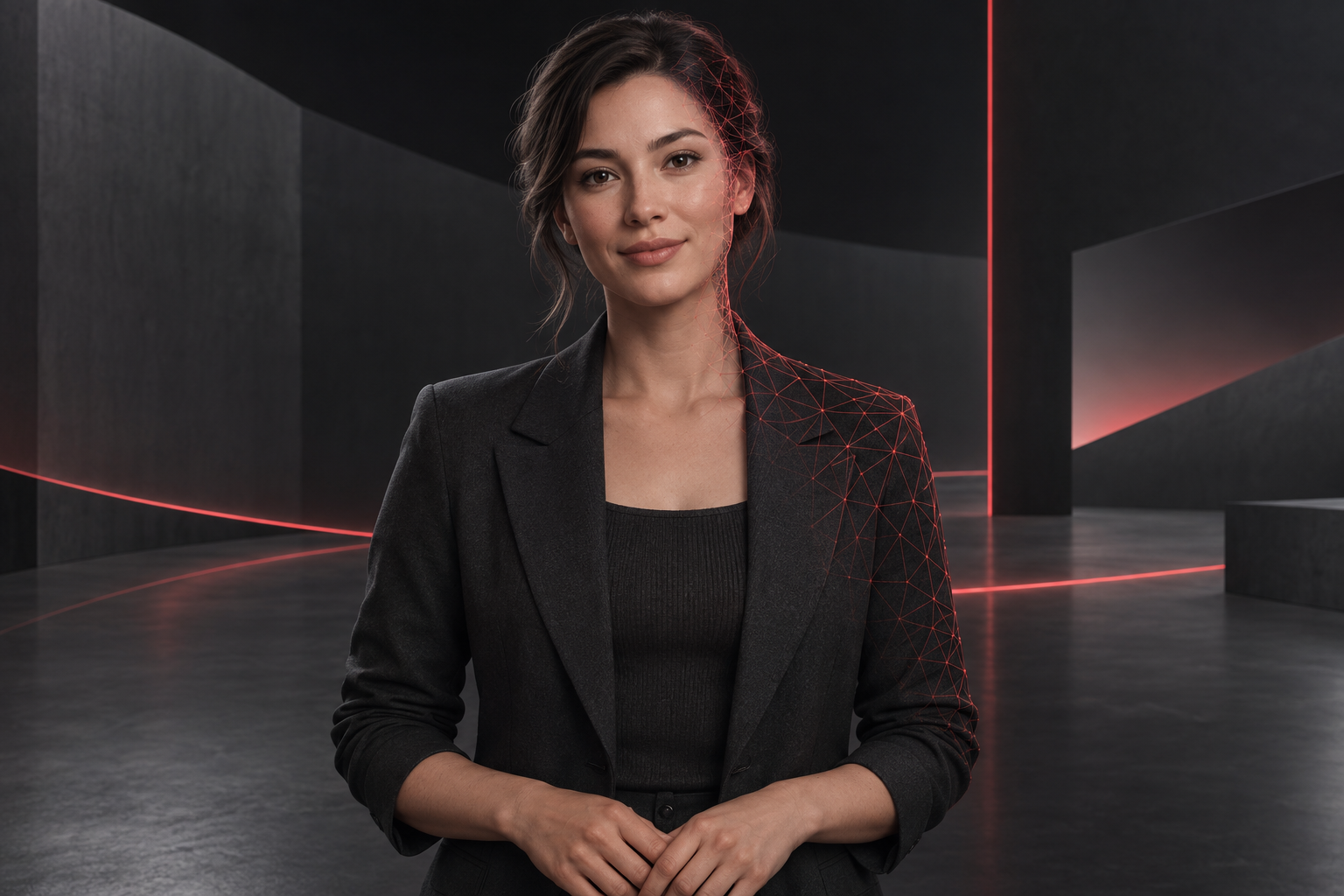
Concept illustration of a digital human; not a client deployment image.
WHAT WE BUILT
A person-shaped interface to an intelligent system.
The digital twin is a representation of a person: an avatar that provides a visible presence for an LLM-powered experience. BACore’s work connected the Unreal Engine application to the language-model layer, keeping the character experience independent of a single model provider.
PRESENCE
Unreal Engine
The real-time 3D application presents the digital person and provides the visual side of the interaction.
CONVERSATION
LLM integration
A connected language model generates the conversational response. The model can change with the project’s requirements.
VOICE OPTION
ElevenLabs
A voice integration can turn the generated reply into spoken audio, adding a voice to the digital character.
MUSEUMS & RETAIL / UNITED STATES
The same foundation. Different visitor experiences.
Our completed work in museums and stores brought digital people and LLM integration together. The examples below illustrate how that approach can be adapted to a venue’s content and audience.
01 / MUSEUMS
A conversational guide to an exhibit.
An avatar can introduce a collection, explain the story behind an object or invite a visitor to explore a topic through questions.
EXAMPLE INTERACTION
“What makes this exhibit significant?”
A visitor-facing conversation shaped around the museum’s subject matter.
02 / RETAIL
A digital host for the store.
An avatar can welcome visitors, explain product information and help people understand the services available in a store.
EXAMPLE INTERACTION
“Can you explain the differences?”
A conversational entry point to the information a shopper needs.
HOSPITALS / ANOTHER APPLICATION
A welcoming point of contact for patients and visitors.
In a hospital reception setting, the same approach can support non-clinical information: finding a department, understanding visitor services or locating the right reception desk.
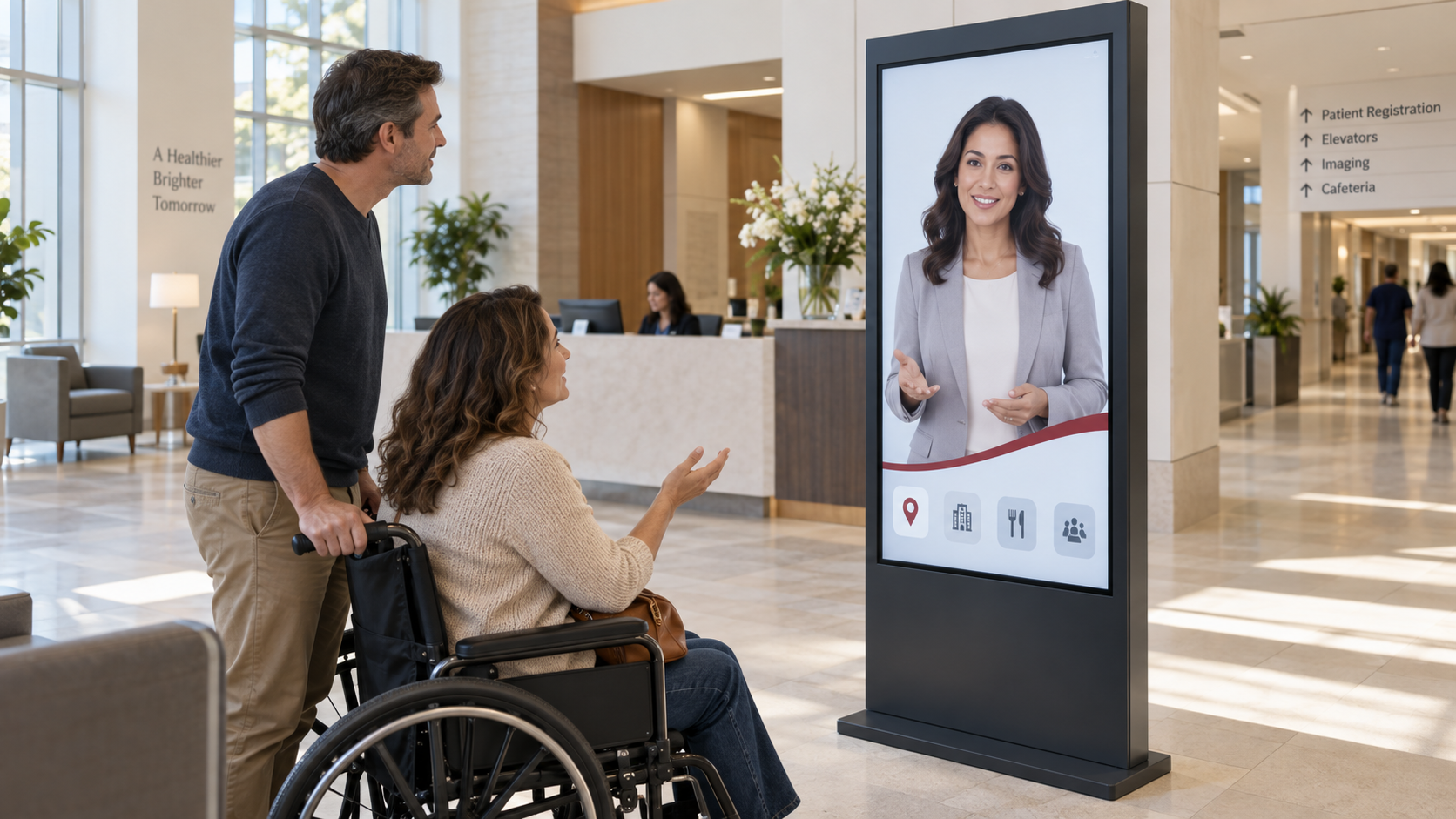
AI-generated illustration of hospital information assistance; not a photograph of a customer installation.
Help people find their way.
An approachable digital host can make a large, unfamiliar building easier to navigate.
Keep the role clear.
This example focuses on reception and practical information for patients and visitors.
SYSTEM ARCHITECTURE
Separate the avatar, the model and the voice.
The application connects the digital person to a language model through an integration layer. Voice is a separate option, so the visual experience does not depend on a single combination of AI services.
01 / INTERACTION
The visitor’s question
The application passes the user’s input into the conversation flow.
↓
02 / APPLICATION
The integration layer
Connect the Unreal Engine experience to the selected inference service.
↓
03 / RESPONSE
The avatar’s reply
Return the response to the experience, with optional speech generation.
CONFIGURABLE COMPONENTS
Visual experience
Unreal Engine · digital human / avatar
Inference service
Ollama · vLLM · other integrated endpoints
Language model
Selected for the application, hardware and conversation requirements.
Optional voice
ElevenLabs text-to-speech integration
Simplified integration diagram. Components and deployment configuration vary by project.
MODEL-AGNOSTIC BY DESIGN
Choose the model behind the character.
The avatar experience is designed around an integration boundary rather than a fixed LLM. The platform can integrate with the following serving tools and model families; the combination is selected for each project.
SERVING & INFERENCE
Ollama / vLLM
These provide the serving layer through which an application can access a hosted model. They are separate from the model itself.
Technical references: Ollama API compatibility · vLLM serving API
MODEL OPTIONS
A choice of model families
Qwen3 · Gemma 3 · gpt-oss-20b · Phi-4-mini · Devstral · Mistral Small 3.1
Model selection depends on the task and deployment. These are integration options, not a claim that every model was used in every installation.
A separate voice layer.
The platform can integrate ElevenLabs text-to-speech for spoken responses. Model choice and voice choice remain distinct integration decisions.
A configuration that fits the venue.
The conversation’s scope, the selected model, the serving environment and the optional voice service are defined together for the experience being built.
BACORE / ARCHITECTURE + IMPLEMENTATION
Connect real-time characters to working AI applications.
This work combines our real-time software development with LLM integration. We design and implement the connections that turn a digital character into an interactive system.
Applied AI & LLM Integration
Explore how we connect models to knowledge, applications and existing workflows.
Software Architecture
See how architecture decisions connect to implementation and delivery.
LET’S BUILD YOUR EXPERIENCE
Who should your digital avatar help?
Tell us about the audience, the environment and the conversations you want to support. We can define the avatar, model integration and delivery scope together.