
ENGINEERING PORTFOLIO / APPLIED AI
AI orchestration.
Better engineering flow.
We connect AI code review, stacked pull requests and repository-aware agents into a controlled delivery workflow. Less time waiting for feedback. More time building the systems that matter.
CodeRabbit · Graphite · RAG · CI/CD
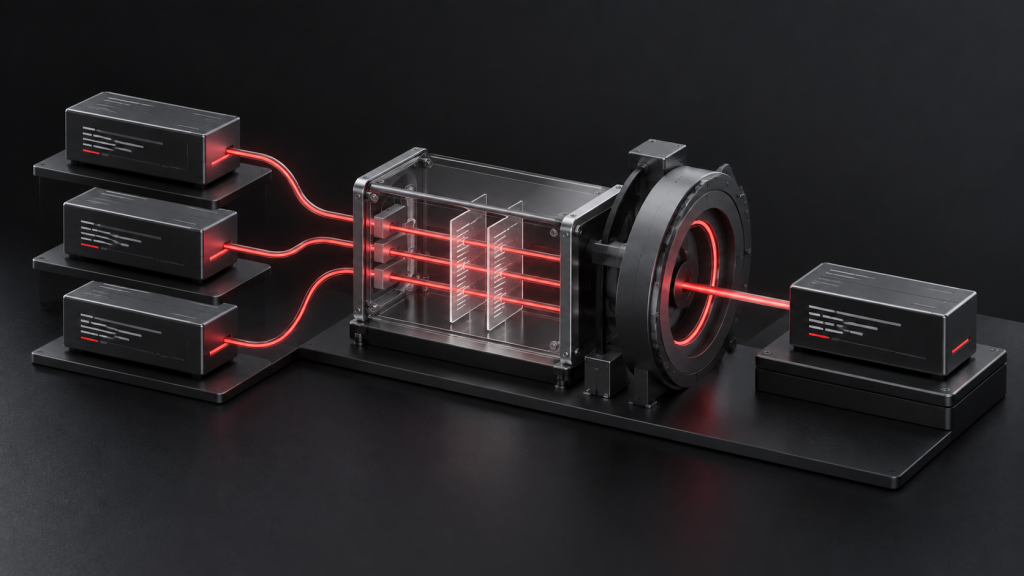
Stacked changes. Automated checks. A deliberate path to production.
MEASURED RESULTS
What changed in the delivery workflow.
Results measured in BACore implementations. These describe the work delivered; the outcome for another team depends on its codebase, workflow and starting point.
40%
Lower change lead time
From committed code to production.
3 days → 4h
Average time to merge
A shorter feedback and approval cycle.
30%
Autonomous resolution
Minor bugs, dependencies and technical refactoring.
+50%
Developer satisfaction
Improvement in developer experience.
Change lead time
Before — 100
After — 60
Relative index: baseline = 100. A 40% reduction leaves 60% of the original lead time.
Average time to merge
Before — 72 hours
After — 4 hours
Three days expressed as 72 hours for a like-for-like visual scale.
Change lead time is a DORA delivery metric. Time to merge, autonomous resolution and developer satisfaction are complementary workflow indicators. About DORA metrics.
WHAT WE BUILT
A connected engineering workflow.
Writing code faster only helps when the rest of the delivery process can keep up. Large pull requests, dependent branches and repeated review work create queues that consume senior engineering time.
BACore’s work connects repository rules, AI review, stacked changes and agent execution to the existing delivery process. The engineering contribution is the integration: context, triggers, validation, handoffs and the approval rules that make the workflow usable by a team.
01 / REVIEW
CodeRabbit
AI-assisted review aligned with the repository. We configure review guidance around coding conventions and architectural boundaries, with targeted instructions for different paths in the codebase.
PR summaries give reviewers a starting point. Findings feed back into the implementation loop, while engineers retain responsibility for design decisions and approval.
02 / CHANGE FLOW
Graphite
Small, dependent pull requests that can move forward as a stack. We structure changes so developers can continue on the next increment while earlier work is under review.
Graphite supports stack creation, updates and restacking on GitHub. Review stays focused on each change, with dependencies visible rather than hidden in one oversized diff.
This CodeRabbit + Graphite workflow uses GitHub. CodeRabbit also supports other Git platforms; an equivalent workflow on another host needs its own integration design.
Keep changes small. Make dependencies explicit.
PR 1 / FOUNDATION
Data contract
The interface the next change builds on.
PR 2 / DEPENDS ON PR 1
Implementation
The behaviour, reviewed as a focused diff.
PR 3 / DEPENDS ON PR 2
Integration
The connection to the wider application.
Illustrative stack: each pull request includes the tests relevant to its scope. Review can progress across the stack; integration respects dependency order.
THE ORCHESTRATION
From issue to reviewed code.
A bounded task becomes a traceable change. Agents prepare the implementation; repository context, automated checks and human review shape what can move forward.
PREPARE & IMPLEMENT →
01 / DEFINE
Issue + context
Read the issue and acceptance criteria. Retrieve relevant code, tests and documentation through RAG.
02 / EXECUTE
Isolated workspace
Create a scoped change and run the relevant tests in an isolated execution environment.
03 / PROPOSE
Stacked pull requests
Open focused pull requests with a change summary, test evidence and explicit dependencies.
VALIDATE & INTEGRATE →
04 / CHECK
AI review + CI
Run CodeRabbit review alongside build, test and security checks. Feed actionable findings back into the change.
05 / DECIDE
Human approval
An engineer reviews intent, architectural fit and risk before approving the change for integration.
06 / SHIP
Merge + delivery
Integrate in dependency order and continue through the existing release process and deployment checks.
REPOSITORY-AWARE AGENTS
Give the agent the context the task needs.
We implemented retrieval-augmented generation (RAG) to bring repository knowledge into the agent’s working context. Relevant source files, tests and technical documentation inform each task instead of relying on a prompt alone.
The orchestration links issue intake, retrieval, implementation, test execution and PR creation. This supports asynchronous work on bounded maintenance tasks while preserving a reviewable record of the change.
Retrieved context improves grounding. Correctness still comes from examining the diff, running tests and reviewing the result.
CONTEXT PIPELINE
Repository knowledge
Source code · Tests · Architecture notes
↓
Index + retrieve
Find the material relevant to the current issue.
↓
Task-scoped context
Use retrieved evidence to guide implementation and review.
ENGINEERING CONTROL
Autonomy with clear boundaries.
AI-generated code moves through the same engineering controls as any other change. Review comments provide guidance; configured CI checks and repository rules enforce the merge conditions.
Bound the execution
Isolated, disposable environments keep task execution separate from production. Repository access and available tools are scoped to the work being performed.
Make checks enforceable
Builds, tests and security scanning produce explicit pass or fail signals. Required checks block merging when validation fails; AI review complements these controls.
Keep people accountable
Human approval covers architectural changes and sensitive decisions. The pull request brings the diff, review findings and test evidence together for that decision.
Delivery performance is assessed alongside stability: deployment frequency, change failures, recovery time and rework. Faster review is useful when the resulting system remains reliable.
ARCHITECTURE + HANDS-ON IMPLEMENTATION
Where does your engineering workflow stall?
Bring us your review bottlenecks, repository constraints and CI/CD process. We can map the workflow, identify a focused starting point and implement the integrations with your team.
Related work: AI Video Orchestration Platform · Hosting Suite